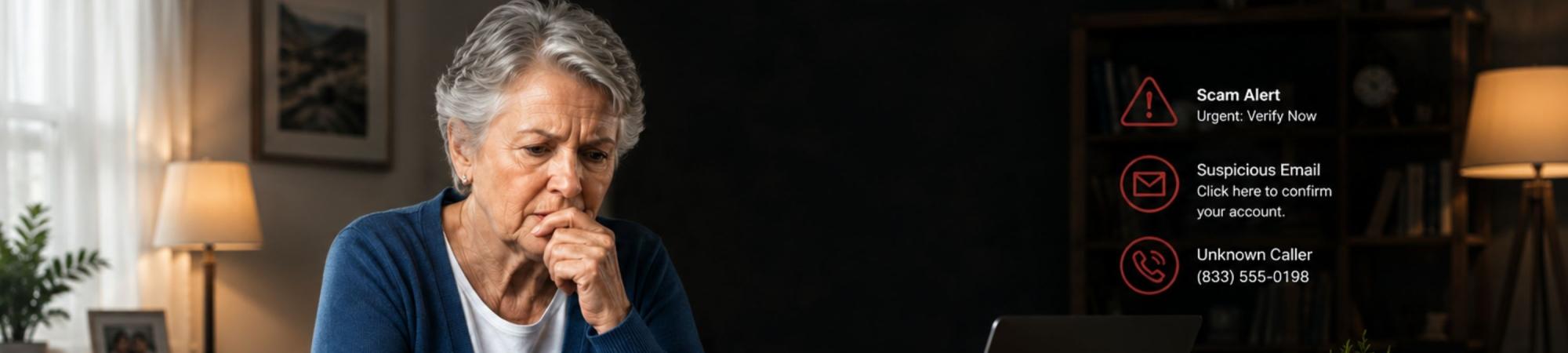
Learn how to recognize common phone and email scams, protect your personal information, and know what to do when something feels suspicious.
How to Spot Phone and Email Scams Before They Cost You Money
Scammers are becoming increasingly convincing. They may pretend to represent your bank, Medicare, Social Security, Amazon, a utility company, law enforcement, or even a member of your own family.
A scammer may know your name, display a familiar telephone number on your caller ID, or send an email that looks official. Some scammers use government logos, employee names, fake identification cards, or information found on social media to make their story appear legitimate.
No matter how convincing the message appears, there are warning signs that can help you recognize a scam before you lose money or reveal personal information.
The most important thing to remember is that you do not have to make an immediate decision. A legitimate organization will allow you time to ask questions and independently verify what you have been told.
Eight Warning Signs of a Possible Scam
They Create a Sudden Emergency
Scammers do not want to give you time to think. They may claim that your bank account has been compromised, your Social Security number has been suspended, a family member has been arrested, or one of your services is about to be disconnected.
The caller may demand that you act immediately and warn that something terrible will happen if you hang up.
They Ask for an Unusual Payment
Be suspicious whenever someone tells you to pay using gift cards, cryptocurrency, a wire transfer, a payment app, cash sent through the mail, gold, or another valuable item.
Government agencies and legitimate companies will not demand these types of payment or tell you to move money to a different account to “protect” it.
They Ask for Personal Information
Never provide sensitive information to someone who unexpectedly contacts you. This includes your Social Security number, Medicare information, bank account number, credit card number, password, PIN, or a verification code sent to your telephone.
A legitimate bank or company should not unexpectedly ask for your password or verification code.
They Tell You Not to Talk to Anyone
A scammer may claim that the matter is confidential or warn that speaking with your family, bank, or law enforcement will make the situation worse.
This is an attempt to isolate you. Never allow someone to pressure you into keeping a financial request secret.
The Message Contains a Suspicious Link or Attachment
A scam email or text may ask you to click a link to verify your account, review a purchase, receive a refund, correct a delivery problem, or protect an account from suspicious activity.
Do not click the link or open the attachment. Contact the organization using a telephone number or website you already know is legitimate.
The Caller Says You Won a Prize
You may be told that you won a sweepstakes, lottery, grant, vacation, or another valuable prize but must first pay a fee or tax.
You should never have to send money to receive a legitimate prize. You also cannot win a lottery or sweepstakes that you never entered.
Someone Pretends to Be a Family Member
In a family emergency or “grandparent” scam, a caller may pretend to be a grandchild or another relative who has been arrested, injured, hospitalized, or stranded while traveling.
Hang up and call your family member directly using a telephone number you already have. You can also contact another relative to verify the story.
A Computer Warning Tells You to Call for Help
A pop-up may suddenly appear on your computer claiming that it has a virus or that your personal information has been stolen. The message may include a telephone number for “technical support.”
Do not call the number or allow anyone remote access to your computer. Close the window, turn off the computer if necessary, and ask a trusted person or qualified technician for assistance.
Five Steps to Follow When Something Feels Wrong
Stop
Do not send money, provide information, click a link, download a file, or give anyone access to your computer.
Hang Up
You are never required to remain on the telephone. It is not rude to hang up on a suspicious caller.
Check
Contact the organization directly using a trusted telephone number, such as the number printed on your bank card, statement, or official correspondence.
Talk to Someone
Call a trusted family member, friend, caregiver, bank representative, or law enforcement agency. A second opinion can help you recognize a scam.
Report It
Reporting a suspected scam may help authorities identify the scammer, stop additional losses, and protect other people.
What If You Already Paid or Shared Information?
Do not be embarrassed, and do not wait. Scammers are trained to sound convincing and regularly impersonate organizations and people we trust. Becoming the victim of a scam does not mean you were careless or foolish.
Contact your bank, credit card company, or payment service immediately. Ask whether the payment can be stopped or reversed.
- Change any passwords that may have been compromised.
- Contact the company connected to the affected account.
- Report the incident to law enforcement and the appropriate fraud agencies.
- Tell someone you trust who can help you review your other accounts.
The sooner you respond, the better the chance of stopping additional losses.