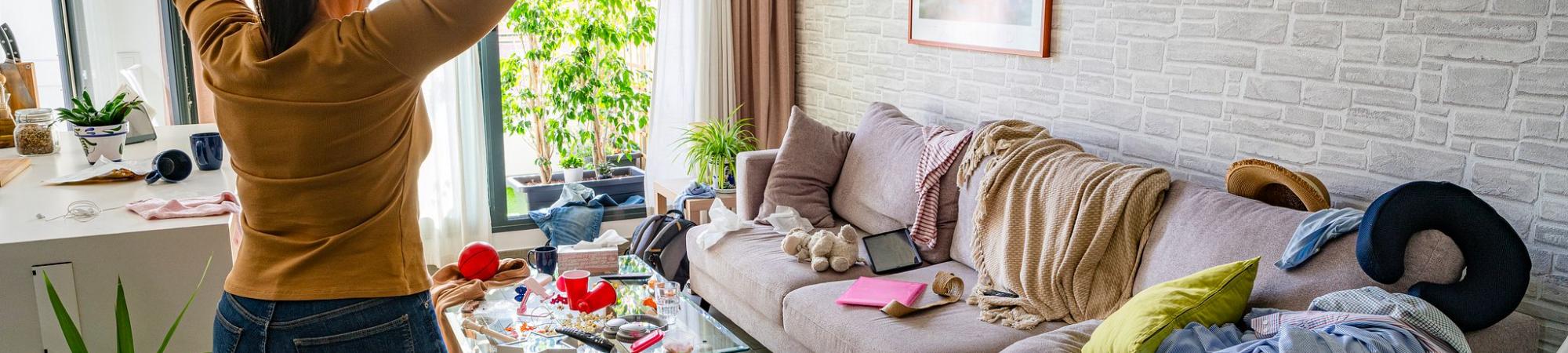
How to Prevent Clutter: 8 Expert Tips
Feel like clutter is taking over your home? Reframe how you think about stuff with these proven strategies from professional organizers.
Understanding the Clutter Crisis
The mental health struggles from isolation during the pandemic manifested in Dorri Olds as clutter. It wasn't so much about dirt as it was stuff, says the 62-year-old native New Yorker. Clothes were thrown "wherever," towers of books lay around rooms and papers covered her desk.
At a certain point Olds, a writer and graphic designer, knew something needed to change. "I grew up around hoarders, and I didn't want to be one," she says. She started to find the motivation to clear it out and, more importantly, not let it get that bad again by adopting new habits.
Here are eight expert strategies to help you build lasting organizational habits and prevent clutter before it starts.
8 Essential Clutter Prevention Strategies
- Make sure everything has a home. Mindfully creating a home for all of your belongings will help you avoid clutter and find items when you need them. Just find a place for each object that works for you — even if it's an "unorthodox" spot.
- Follow the "one in, one out" rule. If you bring something into your home, try to take something out of it. We're not meant to just keep stuffing things in until you have 5 pounds of stuff in a 3-pound bag. Think of it as "upgrading should trigger outgoing."
- Create keep and discard rules. Come up with personal rules to meet your individual needs. For example, only keep enough paper bags to fill a single bag. Having these kinds of rules helps keep the number of things in your home manageable.
- Stop paper pileup in its tracks. Paper is work. Once it's in your home, you'll have to maintain it. Decline receipts at stores, scan what you need to keep, limit printing, and turn off paper statements for utilities and financial accounts.
- Resist the freebies. If something is free, it can still become clutter. If people hand you a piece of paper in the street, just say no. Draw the line: nothing more can come into your house unless you went out with the specific goal of bringing it in.
- Examine your shopping habits. Be aware of everything you're bringing into your home. Ask yourself: what's the worst-case scenario if I get home and I don't have this? If the scenario is not tragic, skip the "just in case" purchase.
- Leave it better than you found it each night. Think of your home as a national park. Make sure everything's put in its place at the end of the day, and then you start tomorrow fresh. Make sure the dish rack is empty and the bedroom floor is clear.
- Give yourself grace. Having clutter does not make you a bad person. Clutter is kind of a normal part of life. The key is identifying if your level of clutter negatively affects your day-to-day life.
Creating a Home for Everything
Mindfully creating a home for all of your belongings will help you avoid clutter and find that item when you need it, says certified professional organizer Sharon Lowenheim, 65. Working with clients in New York City, where apartments are small and the rent is anything but, she has special expertise in how to keep small spaces tidy.
And there's no need to overthink when coming up with homes for your things. Just find a place for each object that works for you — even if it's an "unorthodox" spot.
Psychologist Michael A. Tompkins agrees, and says it's all about establishing new patterns in your daily routines. But building a habit can take a while — the average time is about 60 to 70 days — so it is important to be consistent while you retrain your brain.
"If I come in the house and put my keys down on the dining table as opposed to hanging them on the key hook in the kitchen, I might forget they're there and then run around in the morning trying to find my car keys," he says. "It takes a long time to build a habit, so try to be consistent with putting things back where they belong."
The "One In, One Out" Philosophy
If you bring something into your home, try to take something out of it. "We're not meant to just keep stuffing things in until you have 5 pounds of stuff in a 3-pound bag," Lowenheim says.
A helpful way of reframing the "one in, one out" rule, according to Ripple, is by thinking of it as "upgrading should trigger outgoing."
"When you upgrade something, you buy a new phone or you buy a new kitchen appliance — recognize that you're going to need to put into place a physical action of taking something out," Ripple explains. "So, when we're upgrading our phone, let's turn in or recycle our old phone and its charging cords, if the charging cords have changed."
"If you buy a new Cuisinart mixer and it replaces something that's older and less effective, let that go. The one-out part of the action is just one of the most powerful clutter-reducing strategies."
Pro Tip: Keep Your Rules Visible
Tompkins says every person should come up with rules to meet their individual needs. One example: Only keep enough paper bags to fill a single bag. If you're in the middle of a decluttering session, tape a physical list of your keep-and-discard rules to a surface near you to help with decision making.
Conquering the Paper Problem
Ripple says there's been an "enormous increase" in the amount of paper in adults' homes — especially when compared to the homes of her parents and grandparents. And this can be a huge problem because all this paper requires extensive organizing efforts and storage. In other words, "paper is work."
"One of the things I work on with clients is how to stop paper before it ever actually comes," she says. "Because once it's in your home, now it's costing you because you're going to have to maintain it — declutter it, recycle it, shred it, whatever the right solution is."
To help lower the burden of paper in your home, Ripple recommends declining receipts at stores, immediately scanning and tossing receipts you need to keep a copy of, limiting your printing and turning off paper statements for utilities and financial accounts.
Try This: The Expiration Date Method
Sometimes I have clients who like to print out articles they're going to read or recipes they're going to prepare. I suggest that you write an expiration date at the top of that article on that physical piece of paper. If that designated expiration date has passed and you still haven't read it or made that recipe, then it's probably time to recycle that paper.
Breaking the Freebie Habit
We all know how tempting freebies can be. But next time you're excited to leave with all the mini toiletries from the hotel, Lowenheim wants you to remember any object coming into your home means more work for you.
"People have to get out of the mentality that if something is free, it's not going to become clutter," she says. "If people hand you a piece of paper in the street, don't say 'I'll bring it home and read it.' Just say no. I'm drawing the line here, and nothing more can come into my house unless I went out with the specific goal of bringing it in."
"The more that you prevent things from coming in, the less clutter you will have to deal with."
Mindful Shopping Strategies
A key way to prevent clutter is to be aware of all the things you're bringing into your home and make sure you're not buying things you don't really need — especially in this day and age when it's so easy to add things to your virtual "cart."
"We've all been in the grocery store when we bought that thing 'just in case we didn't already have it at home,'" Ripple says. "And you know, it's just too easy to drop in the cart, whether it's a physical cart at the grocery store or your virtual cart."
"One of the questions I advise clients to ask themselves is, 'what's the worst-case scenario if I get home and I don't have this?' And if the scenario is not tragic, then maybe don't do the 'just in case' buy."
Try a "No Buy" Challenge
Now that the holidays are behind us, Ripple says it can be helpful for clutter and our finances to try to implement "no buy" weeks or even a month: Consider buying only what is absolutely necessary, like the staples, then get creative with what you already own. If you feel that urge to go to a craft store, look at what you already have in your house. Eat the food that you already have in your pantry and in your freezer and use the toiletries that you've been saving for special occasions.
The Nightly Reset Ritual
If you've ever been to a National Park, chances are you've heard the phrase "leave it better than you found it." While this sentiment normally only refers to respecting nature's beauty and cleaning up our beloved parks, Lowenheim has found a way to apply that saying to your own home.
"Think of your home as a national park," she says. "Make sure everything's put in its place at the end of the day, and then you just start tomorrow fresh."
For Lowenheim, that can look like making sure the dish rack is empty, the bedroom floor is clear of any clothes, the cereal box isn't left on the counter and the boots are back in the closet. It's all about being in the habit of noticing what's out of place and taking the steps to put things back where they belong.
The Importance of Self-Compassion
No matter what your living situation looks like, know that having clutter does not make you a bad person — and is not always a problem. In fact, Tompkins says "clutter is kind of a normal part of life" and it's "unrealistic to expect" a clutter-free home.
The key is to be able to identify if your level of clutter negatively affects your life on a day-to-day basis.
Remember: Clutter Is in the Eye of the Beholder
"What is or isn't clutter is in the eye of the beholder," Tompkins explains. "If your living environment is not as tidy as perhaps someone else's, but you can find your keys, you can find your wallet, you don't lose the bills before you pay them and you function just fine in life, then clutter isn't a problem."
But, he adds, if you have trouble doing those things, or are embarrassed to bring people to your home, then clutter is likely an issue.
If your level of clutter has become a problem, know you're not alone. Even professionals like Ripple have gone through stages of life where clutter seemed inescapable.
"The first time in my life struggling with organization, I'd also been diagnosed with stage 1 breast cancer while having young kids," she shares. "It was a very overwhelming time."
That's why she always brings empathy to her work. Sometimes, life just happens, and it's hard to keep up. Luckily, we have each other to lean on.
"A lot of my clients are people who have gone through major life transitions," she says. "They have been ill or they're a caretaker, they've lost their parents, they've lost a job or a marriage has ended."
"It feels so good when I can lighten their physical load in their homes because I can see that lightness go all through them."
Based on expert insights from AARP's guide to preventing clutter