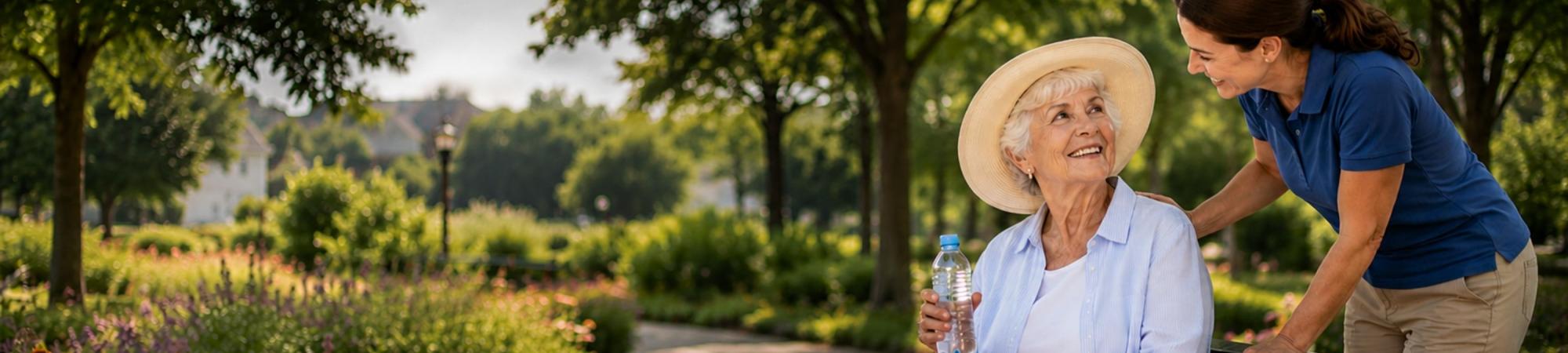
Beating the Heat: Summer Safety Tips for Pasco County Seniors
Florida summers bring plenty of sunshine, but they also bring a serious health risk for older adults: heat-related illness. As temperatures and humidity climb across Pasco County, seniors face a higher risk of dehydration, heat exhaustion, and heat stroke than younger adults. The body's ability to regulate temperature naturally declines with age, and common conditions like heart disease and diabetes, along with certain medications, can make it even harder for older adults to cool down on their own.
The good news: heat-related illness is largely preventable. With a few simple precautions, seniors and the caregivers who support them can enjoy the season safely.
Know the Warning Signs
Heat affects the body in stages, and catching the early signs can prevent a minor issue from becoming a medical emergency.
Heat Cramps
Muscle spasms, often in the legs or abdomen, brought on by heavy sweating and fluid loss. The response is simple: stop activity, move to a cool spot, and sip water or a sports drink.
Heat Exhaustion
Warning signs include heavy sweating, cold or clammy skin, dizziness, nausea, headache, and a fast but weak pulse. Move to an air-conditioned space right away, loosen clothing, and apply cool, damp cloths to the neck and wrists while sipping water slowly.
Heat Stroke
The most serious stage. Look for a body temperature above 103°F, hot and dry (or unusually flushed) skin, confusion, rapid pulse, or loss of consciousness. Heat stroke is a medical emergency — call 911 immediately.
|
When to Call 911 |
|
If an older adult shows confusion, a body temperature above 103°F, hot and dry skin, a rapid pulse, or loses consciousness, treat it as a medical emergency. Call 911 right away and try to cool the person while help is on the way — move them to shade or air conditioning, apply cool cloths, and offer sips of water only if they are alert and able to swallow. |
Simple Steps to Stay Safe
|
1 |
Hydrate throughout the day. Older adults often feel thirst less acutely, so drinking on a schedule matters more than waiting to feel thirsty. Water is best; caffeine and alcohol should be limited since both contribute to dehydration. |
|
2 |
Stay in air-conditioned spaces as much as possible during peak heat, generally late morning through mid-afternoon. Libraries, senior centers, and shopping centers all offer a cool place to spend a few hours if home air conditioning is limited. |
|
3 |
Dress for the weather. Lightweight, loose-fitting, light-colored clothing helps the body release heat more effectively than heavier or dark fabrics. |
|
4 |
Time outdoor activity wisely. Early morning and evening hours are cooler than midday. If you must be outside, take frequent breaks in the shade. |
|
5 |
Check in on neighbors. Older adults living alone are at greater risk simply because no one may notice if they're struggling. A daily phone call or short visit during a heat wave can make a real difference. |
|
How Meals on Wheels East Pasco Helps |